Thinking about cruising St. Joe Beach in a golf cart or LSV? Before you turn the key, it pays to know the local and state rules so you can avoid tickets and keep everyone safe. Whether you own here, rent for the season, or have family in town, clear guidance makes beach days easier. In this guide, you will learn the difference between golf carts and low‑speed vehicles, where you can and cannot drive near St. Joe Beach, and how permits and equipment rules work. Let’s dive in.
Golf carts vs. LSVs in Florida
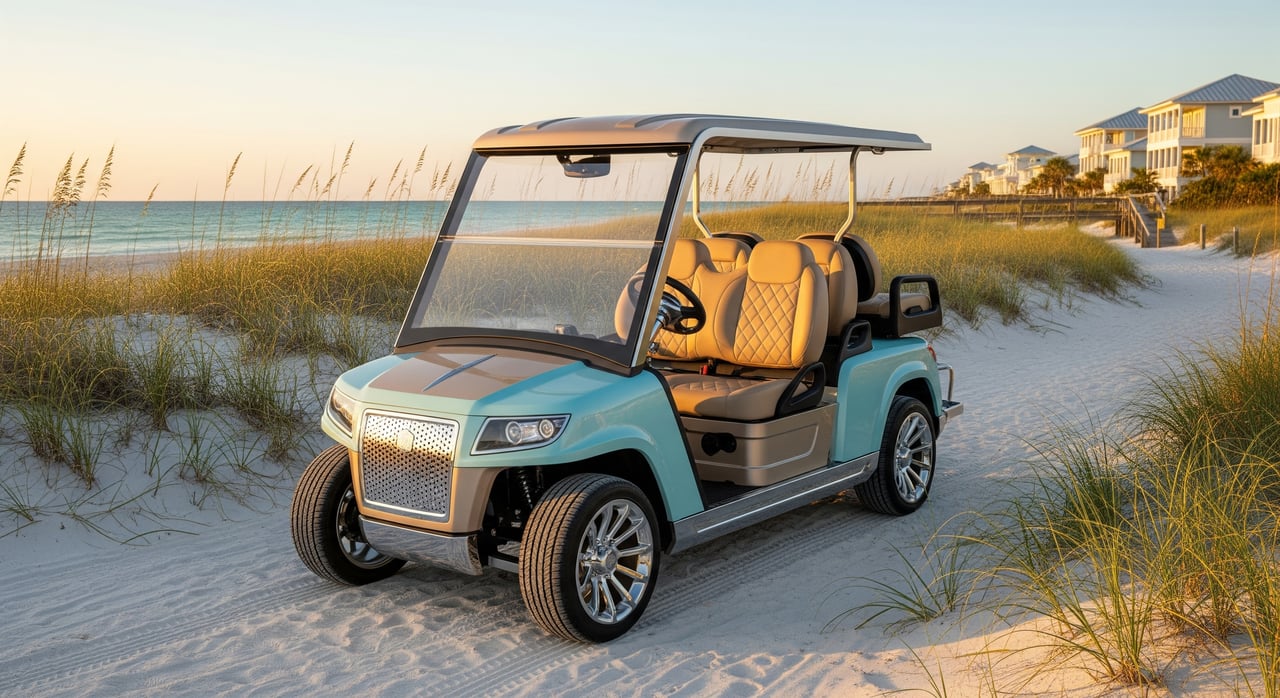
Florida treats golf carts and low‑speed vehicles differently. A golf cart is designed for golf courses and not capable of exceeding 20 mph. An LSV has a top speed greater than 20 mph but not more than 25 mph. You can review the statutory definitions in Florida law and consumer guidance from the state. See the definitions in the Florida Statutes and the state’s low‑speed vehicle overview for context.
- According to the state, LSVs must be titled, registered, and insured. They must have safety equipment like headlamps, turn signals, taillamps, mirrors, a windshield, seat belts, and a parking brake, and they may operate only on streets posted 35 mph or less. Drivers must have a valid license. For details, review the Florida Highway Safety and Motor Vehicles guidance on low‑speed vehicles.
- Golf carts are not automatically titled or registered as motor vehicles. They can operate on public roads only when a city or county designates specific streets for cart use. Local governments can set stricter rules on speed, routes, hours, and age. See Florida Statute 316.212 for the core golf cart rules.
Helpful links:
- Read the statutory definitions in the Florida Statutes, sections 320.01 and 316.212.
- Review the state’s LSV and golf cart guidance on the Florida Highway Safety and Motor Vehicles site.
Where you can drive near St. Joe Beach
Around Port St. Joe and St. Joe Beach, local designations matter. Golf carts may be allowed on some city streets, but not on state highways unless the Florida Department of Transportation has approved a specific crossing. The general rule is simple: do not drive or cross US‑98 in a golf cart to reach the beach. Local rental guidance and city contacts confirm there is no legal golf cart crossing to St. Joe Beach. When in doubt, park legally on the north side of US‑98 and walk.
- For the legal framework on local authority and roadway use, see Florida Statute 316.212.
- To verify current city rules, contact Port St. Joe City Hall or Code Enforcement at (850) 229‑8261 or use the City’s contact page.
- Local rental operators also note the no‑crossing rule for US‑98 near St. Joe Beach, which is a helpful real‑world reminder for visitors.
Beach driving in Gulf County
Beach driving is tightly controlled in Gulf County. You need a county Beach Driving Permit, and driving on the sand is allowed only at specific access points like Indian Pass and parts of Cape San Blas and the north St. Joseph Peninsula. St. Joe Beach is not a drivable access from US‑98. If you see tire tracks, do not assume driving is allowed.
- Get the official Beach Driving Permit details and application from the Gulf County Tax Collector. That page also links to the county’s rules and ordinance.
- For a quick rundown on permitted beaches, general beach safety, and Leave No Trace rules, see the Gulf County Tourist Development Council guidance. Night driving and speed limits on the sand are restricted, so check the current rules before you go.
Permit help:
- Gulf County Tax Collector, Port St. Joe office: (850) 229‑6116.
Safety, equipment, and age rules
If you have an LSV, make sure it is properly titled, registered, insured, and equipped before you drive on streets posted 35 mph or less. Drivers need a valid license. The state outlines the required equipment and insurance on its low‑speed vehicles page.
For golf carts, Florida law lets cities and counties set where and when you can drive. Port St. Joe can require licensed drivers and limit operation to certain streets and hours. State law sets the baseline, and the city can be more restrictive. See Florida Statute 316.212 and contact the City for current local rules.
If you have questions or encounter enforcement, the Gulf County Sheriff’s Office non‑emergency line is (850) 227‑1115.
Renting or buying with a cart in mind
If a home or rental listing says “golf cart friendly,” verify what that means before you plan your route. Ask whether the neighborhood allows carts on its streets, whether there are designated crossings, and whether any HOA rules apply. Some communities have their own cart policies, so review their posted rules.
If you are renting a cart, the rental company may set its own requirements. Many require the renter to be an adult and all drivers to have valid licenses. Expect to show ID and insurance and to follow city rules. For LSVs, confirm you have proper insurance as outlined by the state.
Useful references:
- Example community rules: Barrier Dunes.
- Local rental guidance for Port St. Joe and St. Joe Beach.
- Florida guidance on LSV equipment, registration, and insurance.
Quick checklist before you roll
- Know your ride. Is it a golf cart or an LSV, and is it equipped and insured if required?
- Confirm your route. Stick to city‑designated streets for golf carts. Do not cross or drive on US‑98.
- Check beach access. Beach driving requires a county permit and is allowed only at designated access points, not at St. Joe Beach.
- Carry your credentials. Bring your driver’s license, registration, and insurance if you are operating an LSV.
- When unsure, verify. Call Port St. Joe City Hall at (850) 229‑8261 or the Gulf County Tax Collector at (850) 229‑6116.
Ready to pair smart local insight with your next move on the Forgotten Coast? Reach out to Eli Duarte for neighborhood guidance, listings, and on‑the‑ground support.
FAQs
Can I drive a golf cart on St. Joe Beach in Gulf County?
- No. You cannot legally cross US‑98 to drive onto St. Joe Beach, and beach driving is allowed only at specific permitted access points with a county Beach Driving Permit. See the Gulf County Tax Collector for permit rules.
Do I need a permit to drive on the sand anywhere in Gulf County?
- Yes. A Gulf County Beach Driving Permit is required, and only certain beaches allow driving. Check the Tax Collector page and the county’s beach safety guidance for permitted areas and current rules.
What streets can I use with an LSV near Port St. Joe?
- LSVs that are titled, registered, insured, and properly equipped may operate on streets posted 35 mph or less. Always follow city designations and signage. See the Florida Highway Safety and Motor Vehicles guidance for LSV rules.
What age and license do I need to drive a golf cart in Port St. Joe?
- City rules require licensed drivers, and local governments can be more restrictive than state law. Verify current requirements with Port St. Joe City Hall or Code Enforcement and review Florida Statute 316.212.
Can I cross US‑98 in a golf cart to reach the water?
- No. There is no legal golf cart crossing of US‑98 to St. Joe Beach. Local rental guidance and Florida’s roadway rules reinforce that carts should not use or cross US‑98.
Are rentals allowed to drive on the beach near St. Joe Beach?
- Not at St. Joe Beach. Beach driving is limited to designated areas in Gulf County and requires a permit. Confirm your rental company policies and the county’s permitted access points before you go.
Resources linked above:
- Florida Statutes: 316.212 and 320.01
- Florida Highway Safety and Motor Vehicles: Low-speed vehicles and golf carts
- Gulf County Tax Collector: Beach Driving Permit
- Visit Gulf County: Beach safety and Leave No Trace
- City of Port St. Joe: Contact City Hall / Code Enforcement
- Gulf County Sheriff: Non-emergency contacts
- Local guidance: St. Joe Patio – Port St. Joe and St. Joe Beach
- Community example: Barrier Dunes rules