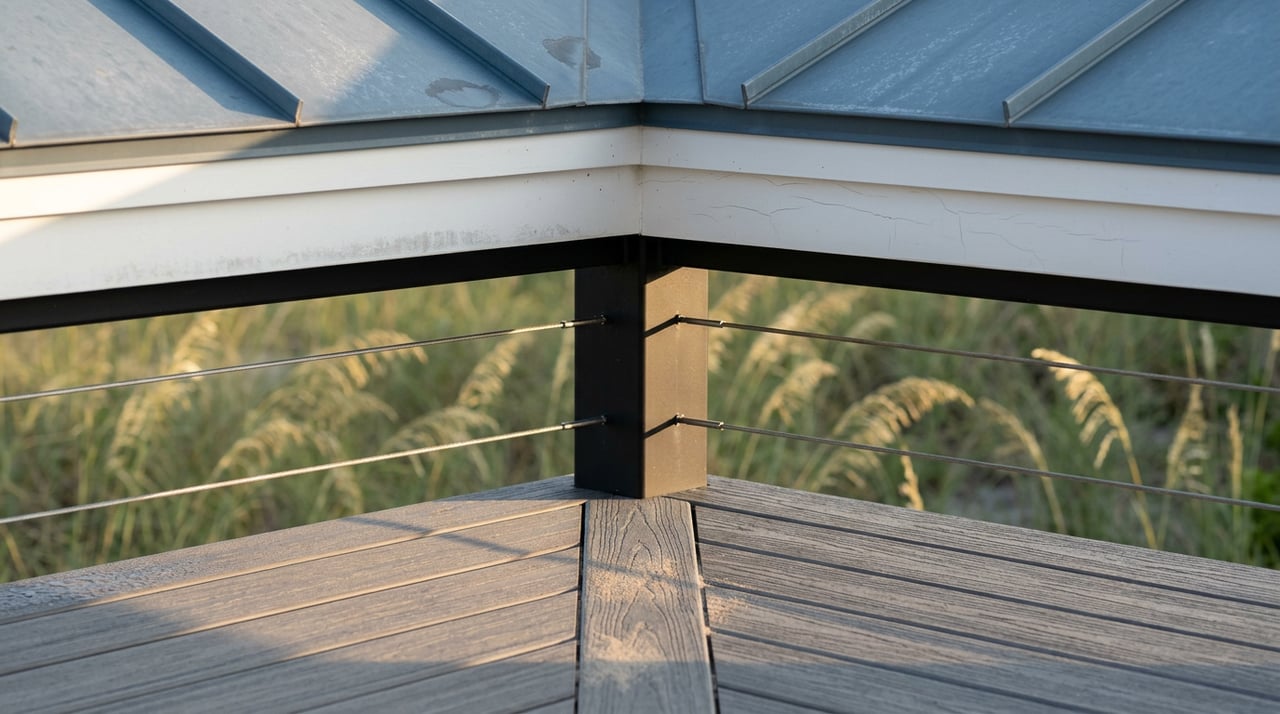
Drive out County Road 30A on a Saturday in mid-September and Indian Pass looks exactly like it did in July. The trucks are still backed up to the boat ramp. The lights are still on at Indian Pass Raw Bar. Somebody is still grilling something on the beach at dusk. Nothing about the scenery tells you that three separate seasonal clocks just shifted under the surface, and that two of them are currently reading closed.
That gap between how the place looks and what it actually allows is the thing worth understanding if you live out here, because it changes what a weekend actually holds. Scalloping is not an option this year at all. Wild oysters will not be legal to harvest for another three and a half months. And the loggerheads that nest on this stretch of beach still have another six weeks of protected turf before the restrictions lift. None of that shows up from the road. All of it shows up the moment you try to plan around it.
The Scallop Season That Didn't Happen
For most of the last decade, late summer in Gulf County meant snorkel masks in the truck bed and a running count of how many scallops made it into the cooler before Labor Day. This year the Florida Fish and Wildlife Conservation Commission closed the recreational bay scallop season in the Gulf County zone entirely, citing very low scallop abundance. There was no shortened window, no partial opening. The season simply did not run in 2026.
That is a different kind of absence than a slow year. A slow year still gives you a permit and a chance. A closed zone gives you neither, and it means the muscle memory of checking scallop counts before a trip out to the grass flats is, for now, a habit with nowhere to go. Fishing, boating, and swimming in Gulf County waters are all still open. Scalloping specifically is not, and it will not be until FWC revisits the population data and decides otherwise.
Oysters Are Still Months Away
The second calendar runs on an even tighter clock. The wild oyster harvest in Apalachicola Bay reopened for a limited stretch running from January 1 through February 28, 2026, under a revised management plan, after years of closure meant to let the bay's oyster population recover. That window has already closed for this year. The next one, if FWC authorizes it again, would not open until January 2027.
What that means day to day is straightforward: any oyster on a menu in Indian Pass right now did not come out of the water in front of you this week. Indian Pass Raw Bar, the seafood house at the corner of Indian Pass Road and 30A that has anchored this stretch of coast since the 1930s, still serves oysters raw, steamed, and baked. The business itself grew out of an earlier oyster surplus. When Hurricane Kate wiped out the McNeill family's wholesale oyster trade in 1986, the family had more oysters than the wholesale market could absorb and started serving them straight off the dock instead. That is the origin of the raw bar as it exists today, rebuilt again after Hurricane Michael tore through in 2018 and reopened by the summer of 2019. The history is real. The current harvest window is not open. Those two facts sit next to each other without contradicting each other, and knowing the difference is the whole point.
Here is how the three windows line up against each other right now, in mid-September 2026:
| Activity | Status this month | Reopens |
|---|---|---|
| Recreational bay scalloping | Closed for the full 2026 season, Gulf County zone | Not scheduled, pending FWC population review |
| Wild oyster harvest, Apalachicola Bay | Closed | January 1, 2027 (if authorized again) |
| Loggerhead nesting season | Active, beach restrictions in effect | Runs through October |
| Recreational fishing and boating | Open | Year-round |
The Turtles Haven't Left Yet
The third calendar is the one most likely to catch a longtime resident off guard, because it is the one that changes what you can do after dark. Loggerhead sea turtle nesting season on this coast runs from May through October. Indian Pass is one of the few beaches in Gulf County where driving on the sand is legal with a county beach driving permit, and it is common to see families fishing, crabbing, and gathered around an evening bonfire right on the beach. All of that still happens during nesting season. What changes is the attention paid to lights, to marked nest sites, and to where a fire pit or a set of tire tracks ends up relative to a nest that a volunteer walked and flagged that morning.
Mid-September sits square in the middle of that window, not at the tail end of it. The season does not wrap until the end of October, which means anyone assuming the restrictions eased once summer crowds thinned out is working from the wrong calendar entirely.
What's Actually Open Right Now
Strip away the two closed seasons and the beach restrictions still in effect, and here is what mid-September on Indian Pass actually offers without qualification:
- Recreational fishing and boating in Gulf County waters, unrestricted by the scallop closure
- Speckled trout, redfish, and flounder, which run well in the cooler shoulder-season months as summer heat breaks
- The daily ferry service to St. Vincent Island operated by St. Vincent Island Shuttle and Fishing Charters, still running trips across the pass to the wildlife refuge for hiking, birdwatching, and beachcombing
- Indian Pass Raw Bar, open for its usual seafood menu of oysters, shrimp, crab legs, and gumbo, sourced rather than locally harvested this time of year
- Beach driving with a county permit, still legal, with turtle nest awareness built into where you park and where you build a fire
That is a real list. It is just a shorter and more specific one than a generic guide to Indian Pass would suggest, because it accounts for what is regulated and closed rather than what simply exists as a category of activity.
Reading the Lull
The version of Indian Pass that shows up in most write-ups treats it as a single, static picture: quiet beaches, old Florida charm, a legendary raw bar, a ferry to a wildlife refuge. All of that is true and none of it moves. The actual place runs on at least three overlapping regulatory calendars that shift independently of each other and of the tourist season, and this particular September happens to be the rare month when all three land at once in the least generous configuration possible. Scallops closed for the year. Oysters three and a half months from reopening. Turtles still holding the beach at night for six more weeks.
None of that makes Indian Pass less itself. It has gone more than a century without much commercial development beyond a scattering of beach homes and one legendary seafood stop, and it is still that kind of place. But knowing which door is actually open this week, rather than which one photographs well, is the difference between planning an afternoon that works and one that runs into a closed season nobody warned you about.
If you are weighing a move to this stretch of the Forgotten Coast, or already call it home and are curious what your property is worth in a market that moves on its own seasonal rhythms, Eli Duarte can walk you through what is actually happening on the ground here, season by season, not just what the listing photos suggest.