Every third Saturday in May, Lake Alice Park fills with vendors, live music, and jars of honey so prized that visitors show up before sunrise to beat the crowd. That's the Wewahitchka most people know from a headline or a drive-through weekend. It is not the Wewahitchka that residents actually live in for the other eleven and a half months of the year.
Right now, in late August, the honey vendors have packed up, the Grass Triangle is empty grass again, and the town looks like nothing is happening. That reading is wrong. This is the season locals actually claim as theirs, and it starts with a decision Florida wildlife managers made about a completely different body of water.
Why a Scallop Closure in the Gulf Changes What Happens on the Lake
The Florida Fish and Wildlife Conservation Commission closed the 2026 recreational bay scallop season in the Gulf County zone because scallop numbers came in too low to sustain a harvest. Gulf waters stayed open for boating, swimming, and fishing generally, just not for scalloping. For a lot of households in this county, scalloping is the default August activity, the thing you do with an afternoon and a mesh bag. With that option off the table this year, the freshwater side of the county, meaning the Dead Lakes, picks up slack it wouldn't otherwise carry.
It's a small mechanism, but it's a real one. When the easiest warm-water activity in the county gets taken off the calendar, the boat ramp fifteen minutes from downtown starts seeing trailers that would normally be headed toward the bay.
What the Water Actually Rewards This Time of Year
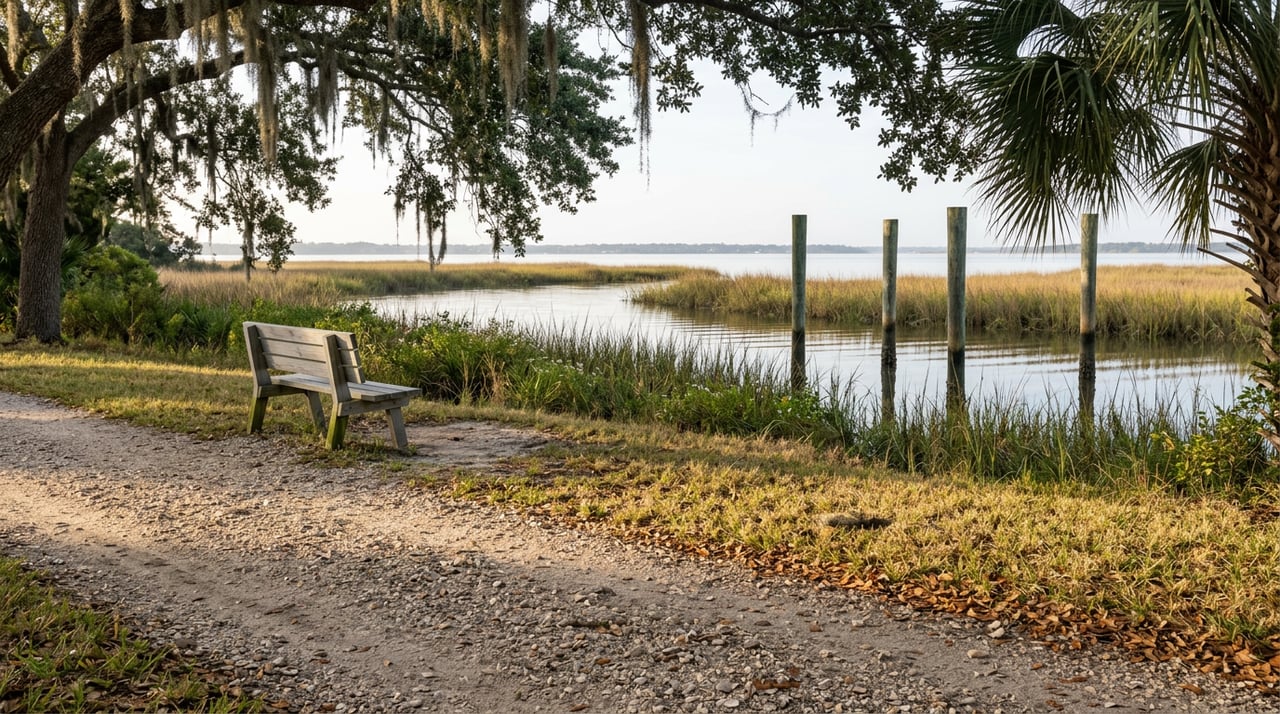
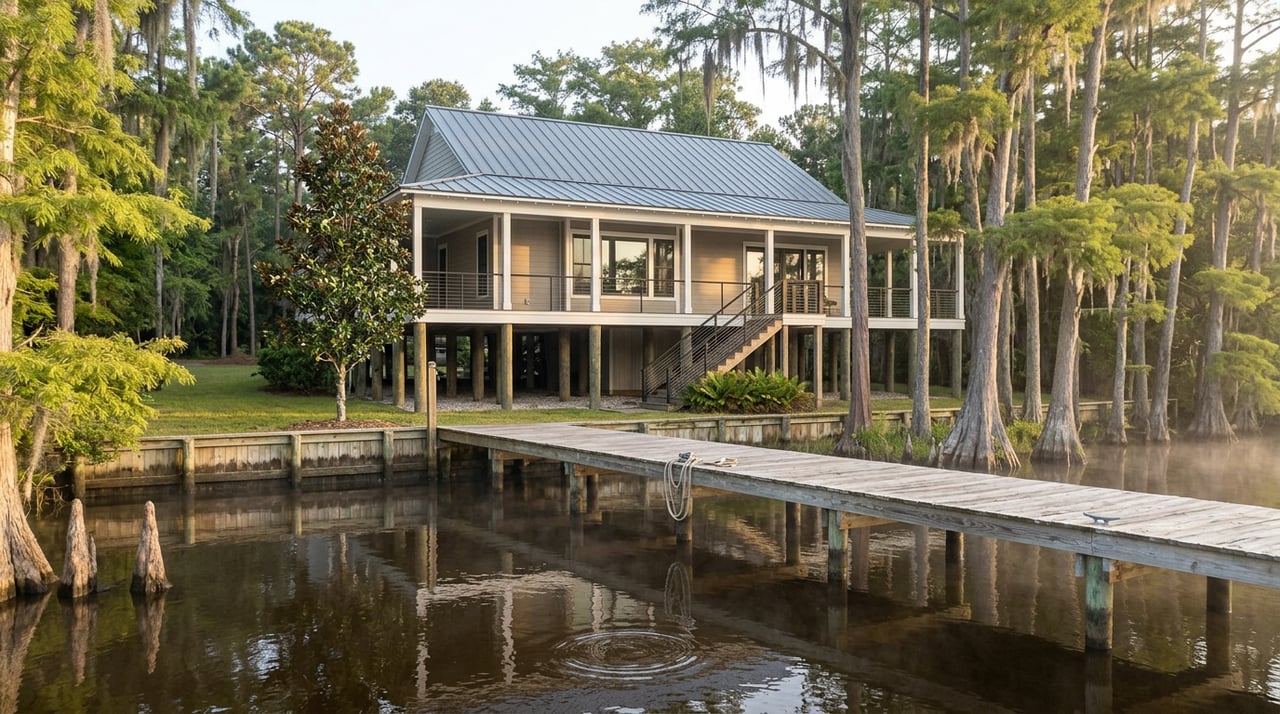
The Dead Lakes are not a normal lake, and that's the point. State wildlife officials describe roughly 6,700 acres of dark, tannic water on the Chipola River, filled with cypress snags and stumps left over from when the lake formed. Running a boat on plane outside the marked channels is a genuinely bad idea here, which is part of why locals don't treat this as a casual tourist put-in the way they might treat a clear-water Gulf beach.
The fish behavior changes as summer wears on, and this is the part that separates someone who fishes the Dead Lakes from someone who just visits it once. Wildlife officials note that panfish push toward deeper water as the season progresses, so the bluegill and redear sunfish that were sitting in open pockets back in April and May have moved. By late August, the producers are the anglers working cypress knees in two to four feet of water with an ultralight rod, a small gold hook, and a wiggler worked slow along the bottom. Cast into the same open water that worked in spring and you'll come up empty.
If you're new to the lake or don't want to learn the snags the hard way, a few names are worth knowing:
- Dead Lakes State Recreation Area, off SR-71 just north of Wewahitchka, has the main public boat ramp. Follow Gary Rowell Road east into the park and the ramp is on the south side once the road splits.
- Dead Lakes Sportsman Lodge sits east of town at the site of the old Dead Lake Dam and serves as one of the fish camps anglers use as a base.
- Magnolia Lodge on South Bass Drive is another local option for anyone staying overnight to fish more than a single afternoon.
- Off the Map Expeditions, run locally by a guide known simply as Mr. Godwin, offers guided kayak and pontoon tours through the cypress for people who want the scenery without navigating the stumps themselves.
None of this is secret information exactly, but it's the kind of detail that separates a place you drove through once from a place you actually know.
The Honey Business Nobody Photographs in May
The festival crowd sees jars on a folding table. What they don't see is the operation behind those jars, and that operation is worth understanding because it explains a lot about why this specific town, out of every small town on the Gulf Coast, ended up with a beekeeping identity in the first place.
The white tupelo gum trees that make this honey possible grow along the Apalachicola River basin, and the harvest window is genuinely narrow, typically running from late March into early May and sometimes closing out in as little as two weeks depending on the year. The L.L. Lanier family has worked that window for three generations, and their story became well known enough outside Gulf County that it inspired the 1997 film Ulee's Gold, starring Peter Fonda, which was filmed right here in Wewahitchka and premiered at the Sundance Film Festival. That's not local trivia repeated for its own sake. It's the reason a town of roughly 2,200 people has a beekeepers association active enough to run its own exhibition tent every May, and why beekeeping families like the Laniers and operations like Rish Tupelo & Co. still shape how the town describes itself.
Nathan James Rish, who works with the Gulf County Beekeepers Association, has talked about growing up on the honey and how people who move away and try other honey notice the difference immediately. That kind of loyalty doesn't come from a two-week festival. It comes from the trees still standing in the swamp right now, in August, doing nothing that anyone photographs, quietly setting up next spring's harvest the same way they have for generations.
Reading the Town in the Off-Season
Put these two threads together and you get the actual shape of a Wewahitchka year. The scallop closure this season nudges more boats toward the Dead Lakes than usual. The honey trees are between harvests, not gone, just working on a schedule visitors never see. Neither of these is a headline. Both of them are why the town in late August feels different from the town in May, even though nothing obvious announces the change.
That's worth knowing if you're the kind of resident who plans a Saturday around what's actually biting rather than what's on the community calendar. The gold-hook, deep-water pattern on bream and shellcracker will hold through the rest of the summer. The put-ins at Dead Lakes State Recreation Area and the two lodges will keep serving the same handful of families and guides who know how to read the snags. And the tupelo trees along the river basin will keep doing their quiet work until the flowers open again next spring and the whole cycle starts over.
None of this needs a festival banner to be real. It just needs someone paying attention, which is exactly what living here for more than a season teaches you to do.
Whether you're already circling the Dead Lakes on weekends or thinking ahead to a future move to a Gulf County town that runs on rhythms like this one, the Eli Duarte team knows Wewahitchka and the rest of the Forgotten Coast from the inside. Reach out for a free home valuation or a local market guide when the time comes, and let's talk about what a place like this actually offers, honey trees, cypress stumps, and all.